
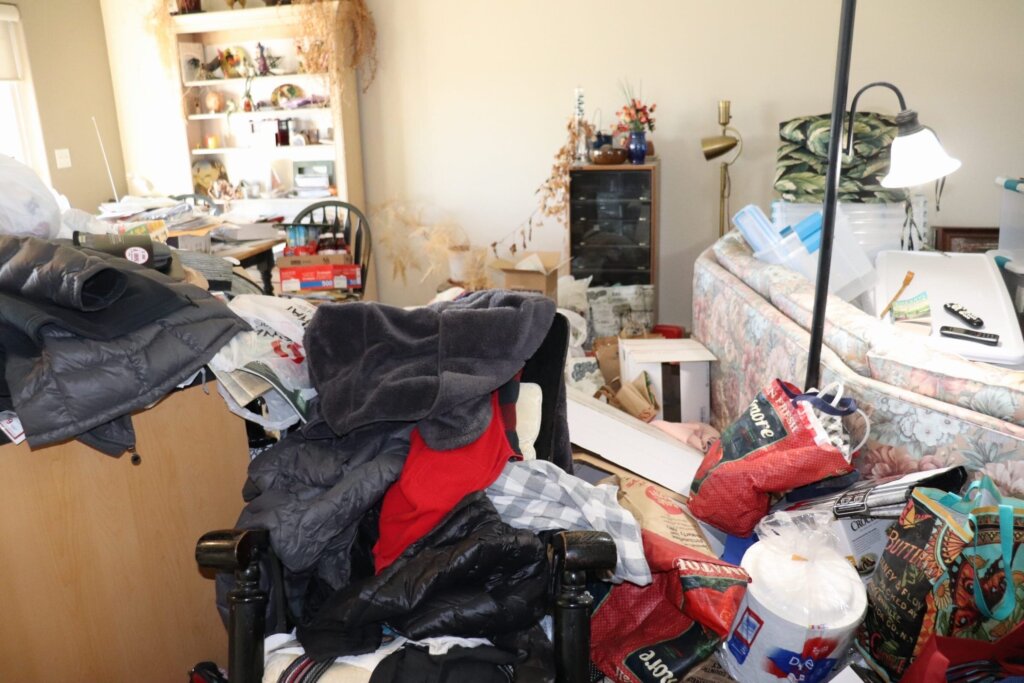
Selling a house filled with years of belongings can create an unusual challenge. You may know about some property problems, have no idea what is hidden behind boxes or furniture, and still need to give a buyer accurate information about the home.
For homeowners in McAllen, Edinburg, Mission, Pharr, Weslaco, Harlingen, Brownsville, and nearby Rio Grande Valley communities, the key question usually is not whether the property should be called a “hoarder house.” What matters more is what you actually know about its physical condition.
Texas has seller-disclosure requirements that apply to many residential sales. Depending on the property and transaction, known roof leaks, plumbing failures, electrical problems, structural issues, code notices, unpermitted work, water damage, or safety concerns may need to be addressed.
If you are still deciding how to handle the property overall, you can also read our guide to selling a hoarder house in Rio Grande Valley, TX.
Quick Answer
Texas does not have a special disclosure category simply because a home is described as a hoarder house. In many residential transactions, sellers are expected to provide information about known property conditions and defects.
Heavy clutter becomes especially important when it hides damage, limits access, or is connected with known repair, safety, sanitation, or municipal issues.
Selling the property as-is does not mean a seller should conceal a known defect. At the same time, you should not guess about conditions you genuinely cannot evaluate.
That distinction—known problem versus genuinely unknown condition—is one of the most important things to understand when selling a heavily cluttered property.
Focus on the Property, Not the Label
“Hoarder house” is a common search term, but it does not tell a buyer much about the home’s actual condition.
One cluttered house may simply need a major cleanout. Another may have years of deferred maintenance, roof leaks, damaged flooring, pest activity, broken plumbing, or unsafe electrical conditions.
When preparing to sell, focus on practical facts such as:
- rooms that cannot easily be accessed;
- known water or roof damage;
- broken plumbing or electrical systems;
- damaged flooring or walls;
- pest activity;
- sanitation or safety concerns;
- unpermitted additions;
- municipal notices; and
- repairs previously completed.
The condition of the property matters more than attaching a label to the person who lived there.
Does Texas Require a Seller’s Disclosure Notice?
For many sales of previously occupied single-family homes, Texas law requires a seller to provide information about the property’s condition.
The Texas Real Estate Commission Seller’s Disclosure Notice is commonly used to satisfy applicable requirements under Texas Property Code §5.008.
The statute also includes exemptions for certain transfers, so homeowners should not assume every transaction is treated the same way.
A practical rule is:
Answer based on what you genuinely know, and do not make unsupported statements about areas you cannot inspect.
If you are unsure whether a disclosure notice applies to your transaction, speak with a Texas real estate attorney, title company, or licensed real estate professional.
What Problems May Need to Be Disclosed?
Severe clutter does not create a completely different set of disclosure rules. It can simply make ordinary property problems harder to see.
Roof Leaks and Water Damage
Boxes, furniture, and stored belongings can hide ceiling stains, damaged drywall, warped flooring, or evidence of water intrusion.
If you already know that the roof leaked or water entered the house, that fact does not disappear because the area is now difficult to inspect.
Relevant information may include known:
- roof leaks;
- recurring ceiling stains;
- plumbing leaks;
- damaged drywall;
- previous water intrusion; or
- repairs related to water damage.
Removing damaged belongings does not erase the underlying history of the property.
Plumbing, Electrical, HVAC, and Other System Problems
In a heavily cluttered home, basic systems may be difficult to reach.
Stored items may block outlets, water heaters, HVAC equipment, plumbing access points, or electrical panels.
If you already know something is broken or needs repair, disclose it accurately where required.
Examples may include:
- leaking pipes;
- backed-up drains;
- nonfunctioning fixtures;
- damaged outlets;
- exposed wiring;
- broken air-conditioning equipment; or
- other known mechanical problems.
The Texas disclosure form asks sellers about many property systems and whether they are aware of items that are defective, not working, or in need of repair.
Foundation and Structural Problems
Clutter itself does not prove that a home has foundation damage.
However, if you already know about structural movement, foundation repairs, framing damage, major cracks, or another structural issue, those facts should not be ignored simply because the property is being sold in poor cosmetic condition.
The key question remains: What do you actually know about the house?
Health and Safety Concerns
Some neglected properties develop problems that go beyond appearance.
Depending on the home, these could include:
- exposed electrical hazards;
- unstable flooring;
- blocked exits;
- unsafe debris;
- damaged stairs;
- standing water;
- pest infestations; or
- severe sanitation concerns.
Not every cluttered property has these problems. But if a genuine safety issue is known, an as-is sale should not be treated as permission to hide it.
Code Enforcement and Municipal Issues
Exterior debris, junk vehicles, unsafe structures, sanitation concerns, or unpermitted work can sometimes result in municipal notices.
For example, the City of Edinburg Code Enforcement Division handles issues involving property maintenance, sanitation, zoning, and neighborhood nuisances.
A homeowner might already have paperwork involving:
- accumulated debris;
- an overgrown property;
- unsafe structures;
- junked vehicles;
- sanitation problems;
- illegal construction; or
- unpermitted additions.
If you have received a notice, keep it. Do not throw it away during a cleanout.
You can also read our guide to selling a house with code violations in Rio Grande Valley, TX for more detail.
Local procedures can vary between Edinburg, McAllen, Mission, Brownsville, Harlingen, and other South Texas communities.
Unpermitted Additions or Alterations
Older Rio Grande Valley homes sometimes have enclosed patios, converted garages, added bedrooms, storage buildings, or electrical and plumbing changes completed over many years.
If you know work was performed without required permits or against applicable requirements, do not intentionally conceal it.
A city building department or qualified professional can help determine what records exist.
Lead-Based Paint in Older Homes
Federal rules may apply to many homes built before 1978.
For most covered pre-1978 housing, sellers must provide certain information about known lead-based paint and lead hazards and provide required educational material.
Homeowners can review the EPA’s lead-based paint disclosure guidance.
This requirement is separate from whether the property was cluttered.
What If You Do Not Know What Is Under the Clutter?
This is one of the most common concerns.
Suppose the garage has been packed from wall to wall for years. You cannot see part of the floor and have no reliable information about its condition.
Or perhaps you inherited the property and never lived there.
Separate the situation into three categories.
You Know There Is a Problem
If you know a bathroom pipe has leaked repeatedly, that fact does not become unknown simply because boxes now block access.
You Have Records of a Previous Issue
Old inspection reports, contractor invoices, insurance claims, foundation reports, pest records, and municipal notices can help establish what happened in the past.
Keep them.
You Truly Do Not Know
If an area has been inaccessible for years and you genuinely do not know its condition, do not casually claim that it is defect-free.
Texas disclosure requirements generally focus on the seller’s knowledge. They do not require you to pretend you know more than you do.
Being accurate about both known and unknown conditions is better than guessing.
Does Selling As-Is Change Disclosure Obligations?
An as-is sale and disclosure address different issues.
As-is generally addresses: what repairs the seller will or will not make.
Disclosure addresses: what the seller knows about the property.
A homeowner may choose not to replace the roof, repair flooring, fix the HVAC system, repaint, or empty every room before selling.
That does not mean known defects should be concealed.
If you are considering this option, see our guide to selling a house as-is in Rio Grande Valley, TX.
What Should You Gather Before Selling?
Before completing paperwork or ordering a major cleanout, look for documents that may help explain the property’s history.
Useful records may include:
- inspection reports;
- roof or foundation invoices;
- plumbing receipts;
- HVAC records;
- pest-control documents;
- insurance claims;
- building permits;
- code-enforcement notices;
- contractor estimates;
- surveys; and
- records of major renovations.
If the property was inherited, protect deeds, estate documents, tax records, family photographs, identification papers, and valuables before anyone begins removing belongings.
For estate-related situations, see our guide to selling an inherited house in Rio Grande Valley, TX.
A Simple Step-by-Step Approach
1. Protect Important Documents and Personal Items
Before hiring a cleanout company, separate legal documents, family records, photographs, valuables, and anything heirs want to keep.
2. Write Down Known Problems
Make a simple list of previous leaks, plumbing problems, foundation work, electrical issues, pest treatment, code notices, and major repairs.
3. Identify Inaccessible Areas
Do not make unsupported claims about rooms or surfaces you cannot reasonably inspect.
4. Gather Existing Records
Old invoices and reports can help clarify what was repaired and when.
5. Decide Whether Cleanup Is Worth the Cost
A full cleanout may help if the house has strong retail potential.
It may not make financial sense if you plan to sell directly to a buyer willing to take the property with belongings remaining.
6. Compare Selling Options
Consider your expected net proceeds, cleanup costs, repair budget, available time, privacy needs, and how difficult the house will be to show.
Which Selling Option Makes Sense?
| Option | Best Fit When | Main Advantage | Main Tradeoff |
|---|---|---|---|
| Clean, repair, and list | Property has strong retail potential | Broad market exposure | Requires time and upfront money |
| Partially clean and list as-is | Home is marketable but needs work | Access to retail and investor buyers | Buyers may negotiate repairs or price |
| Sell directly in current condition | Cleanup or repairs are difficult | Fewer preparation steps | Offer may be below renovated retail value |
| Keep and renovate | Owner has capital and time | Potential future value | Continued cost and management |
A traditional listing may be better when cleanup is manageable and maximizing market exposure is your main goal.
A direct sale may be worth comparing when the property contains extensive belongings, needs major repairs, is inherited or vacant, or would be difficult to prepare for showings.
Neither choice is automatically best.
What Selling an Inherited Hoarder House in Edinburg Can Look Like
Consider a hypothetical family that inherits an older house in Edinburg.
Two bedrooms are packed with furniture and boxes. The garage is difficult to enter. The family already knows the roof leaked during heavy rain and that one bathroom has a recurring plumbing problem.
Several years earlier, the city also contacted the owner about debris outside the property.
The family does not know whether flooring underneath the stored belongings is damaged.
A sensible approach is to separate what is known from what is unknown.
Known: previous roof leak, plumbing problem, municipal notice.
Unknown: condition of flooring that cannot currently be seen.
The family can gather available records, protect important belongings, make accurate disclosures based on its knowledge, and then compare a traditional listing with an as-is sale.
They do not need to invent an answer about the hidden flooring.
They also should not pretend the known plumbing problem never existed.
Common Mistakes to Avoid
Assuming “As-Is” Means No Disclosure
Selling without repairs and disclosing known property information are different issues.
Throwing Away Important Records
Contractor invoices, municipal notices, and inspection reports may become useful later.
Guessing About Hidden Areas
If you genuinely do not know something, avoid making unsupported statements.
Using “Hoarder House” Instead of Describing the Property
Buyers benefit more from knowing about leaks, plumbing failures, electrical problems, safety hazards, and code issues.
Spending Heavily Before Comparing Options
Before paying for dumpsters, contractors, or a complete cleanout, determine whether those expenses are likely to improve your net proceeds.
Frequently Asked Questions
Do I have to disclose that a house was a hoarder house in Texas?
Not specifically as a label. Texas disclosure rules generally focus on known property conditions, defects, repairs, safety concerns, and other required information.
Can I sell a hoarder house as-is without cleaning it?
Possibly. Some buyers purchase homes with furniture, boxes, or debris remaining. Selling as-is does not mean known defects should be concealed.
What if I don’t know what is underneath the clutter?
Do not guess. Distinguish genuinely unknown areas from problems you already know exist.
Do I have to disclose an old roof leak if it was repaired?
A previous leak or repair may still be relevant depending on the circumstances. Keep repair records and describe known property history accurately.
What if I inherited the house and never lived there?
Your knowledge may be limited. Gather available records and ask a Texas attorney or title professional whether any disclosure requirement or exemption applies.
Can I sell a hoarder house with code violations in the Rio Grande Valley?
Possibly. Open notices, liens, or compliance requirements can affect the transaction, so confirm the property’s status with the appropriate city or county.
Can a cash buyer purchase the house with belongings still inside?
Some can. Confirm in writing what may remain after closing, who handles cleanup, and whether any costs affect the offer.
How to Make Selling a Hoarder House Easier
A cluttered property does not have to become a rushed sale.
Start with what you actually know. Protect important records. Separate known defects from genuinely inaccessible areas. Gather previous repair and municipal documents. Then compare the cost of preparing the property with the likely outcome of selling it in its current condition.
A traditional listing may be the better option when the home has strong retail potential and cleanup is manageable.
A direct sale may make more sense when extensive belongings remain, major repairs are needed, the property is inherited or vacant, or regular showings would be difficult.
If you want to sell as-is without handling repairs or a traditional listing process, EMR Investments LLC can review the property and provide a local cash offer for you to compare with your other options.
You can request a no-obligation cash offer and decide whether the price and terms fit your situation.
This article provides general homeowner education, not legal, tax, financial, inspection, or real estate advice. Disclosure obligations can vary depending on the property, transaction, contract, seller, and applicable exemptions. Consult a qualified Texas real estate attorney, title company, licensed real estate professional, tax professional, or local official when appropriate.